Posts

Showing posts with the label IPV4 address

What is Public IP Address and what are its benefits
Image
  In today's world, where the internet has become an integral part of our lives, it's important to understand the basics of networking. One of the most important concepts to understand is the Public IP address. In this blog, we will explore what a Public IP address is and why it's important. We will also delve into the benefits of having a Public IP address. What is a Public IP Address? A Public IP (Internet Protocol) address is a unique identifier that is assigned to a device, such as a computer, router, or server, on a network that is connected to the internet. It allows devices to communicate with other devices on the internet and can be used to access websites, online services, and other resources. Public IP addresses are different from Private IP addresses, which are used within local networks to identify devices and cannot be accessed directly from the internet. Public IP addresses are provided by Internet Service Providers (ISPs) and are allocated from a pool of avai...
What is the Difference Between IPv6 and IPv4 Address?

Image
Want to know the difference between IPv6 and IPv4 address? You've landed on the right page. We are going to cover what IPv4 and IPv6 addresses are, their features and the differences between them. Continue reading to learn all about IPv6 and IPv4 addresses.  What is IPv4? IPv4 (Internet Protocol version 4) is the fourth version of the Internet Protocol (IP), a protocol used to identify and communicate with Internet-connected devices. IPv4 is the most frequently used Internet protocol, and it is used to issue unique numerical addresses, known as IP addresses, to all devices connected to the Internet.  An IPv4 Address is a 32-bit number that is commonly represented in decimal format with four sets of integers ranging from 0 to 255 separated by periods, for example, 192.0.2.1. IPv4 supports up to 4.3 billion distinct addresses, which has become a constraint since the number of devices and Internet users has expanded tremendously in recent years. Features of IPv4 Address The foll...

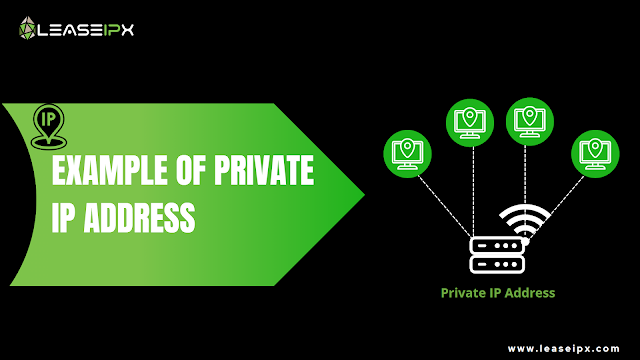
What is a Private IP Address ?

Image
An IP Address Private range refers to a group of non-internet-facing IP addresses which are used to connect the internal networks.   Equipment for networks, like routers, utilize the translation of network addresses to provide private IP addresses. They are utilized to locate devices that are on the internet or in a local network.   IP addresses also permit information transfer between devices on networks. Private IP addresses are widely employed in business, household or enterprise-level networks.   Each device connected to the internet like tablets, smartphones, computers and printers has a distinct IP address.   Routers require a method of identify these devices as well as the devices might require a method to distinguish themselves from one another and that's the reason private IP addresses are used.   A router generates private IP addresses for identification. Private IP addresses were invented to prolong the life of IPv4 addresses. IPv4 addresses are among...

Ways To Find IPv4 Address

Image
If you wish for other devices and networks connected to the internet to recognize your device and network you require a unique digital address, also known by the name of the IPv4 address.   Finding the IPv4 address is a vital step in understanding the workings of the internet and maximizing how you use your personal network. This blog will clarify the difference between IPv4 address as well as IPv6 address are, and why it is important to be aware of what is your IP address, and the best way to find it. What's the definition of an IPv4 address? The Internet Protocol address (IP address) is an unique number assigned to each device or computer which has access to internet.   IP addresses for public use are assigned by ISPs.   The IP address is used to identify the host network as well as the way to it, which allows the networks to recognize different networks or devices as well as redirecting internet traffic. IP addresses may belong to internal networks or external network...